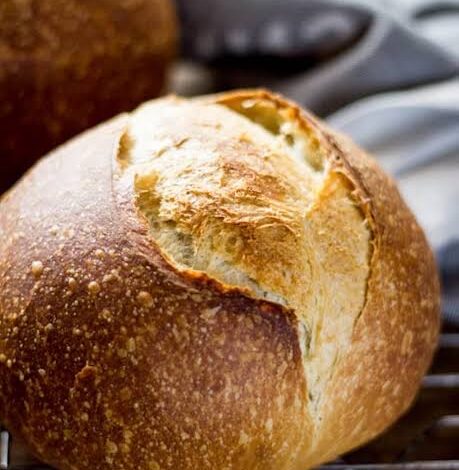
Baking bread at home is one of the most rewarding and warm experiences you can ever have in your kitchen. This particular recipe focuses on creating a classic golden brown artisanal sourdough boule that sits peacefully on your counter to rest before it is sliced and shared. A sourdough boule is a traditional round loaf of bread made using natural fermentation rather than commercial factory yeast. When you bake this loaf properly, it features a deeply blistered, golden crust that crackles when you press it gently, alongside an interior that is light, airy, and full of pleasant chewy air pockets. The beauty of this recipe lies in its simple whole food ingredients, requiring nothing more than flour, water, fine salt, and an active sourdough starter. As the fresh loaf emerges hot from the oven, it enters the critical resting phase on a wire cooling rack. This quiet resting period allows the internal moisture and steam to redistribute evenly throughout the loaf, setting the delicate crumb structure and locking in all those subtle homemade flavors. By learning this recipe, you are joining an ancient human tradition of bread making that brings immense satisfaction to both beginner bakers and seasoned kitchen enthusiasts alike.
People all around the world fall deeply in love with artisanal sourdough because it offers a sensory experience that standard grocery store bread simply cannot match. The bright golden color of a well baked loaf immediately catches your eye, promising a rich depth of flavor created through long, slow fermentation. When you take your first bite, the contrast between the crispy, crunchy outer crust and the soft, pillowy middle creates pure perfection in every mouthful. Beyond its incredible flavor and texture, people love sourdough because of the mindful process required to craft it from scratch. Feeding your starter, gently folding the wet dough, shaping the round boule, and watching it rise creates a calming ritual that slows down our busy modern lives. There is also a incredible feeling of pride when you lift the lid off your hot Dutch oven and see a high rising, beautifully golden loaf that you created with your own two hands. Sharing a loaf of warm, homemade sourdough bread with your family and friends creates instant joy, turning a simple meal into a memorable feast filled with comforting aromas.
There are so many wonderful reasons to make this beautiful sourdough boule, whether you are looking for emotional comfort, supreme taste, or better health and fitness. Emotionally, baking sourdough serves as a gentle form of therapy after a stressful week, giving you time to unplug from digital screens and focus on a tangible physical craft. The delicious smell of fresh baking bread filling your home instantly creates feelings of warmth, safety, and cozy happiness for everyone under your roof. From a taste perspective, long natural fermentation breaks down complex starches, producing a complex sour flavor profile with rich nutty undertones that store bought loaves completely lack. From a fitness and digestive health standpoint, sourdough is a fantastic choice for your daily diet because the natural wild yeast and lactic acid bacteria pre digest the gluten and starches. This process makes the nutrients much easier for your body to absorb while remaining far gentler on your stomach compared to quick yeast breads. Whether you are fueling your body after a tough workout with clean complex carbohydrates or preparing a lovely weekend brunch for loved ones, this golden boule fits perfectly into a balanced lifestyle.
Taking on the journey of homemade sourdough baking connects you directly with healthy eating habits and natural cooking methods. Many modern store bought breads contain added chemical preservatives, dough conditioners, excess refined sugars, and artificial oils that your body does not actually need. In stark contrast, crafting your own artisanal sourdough gives you complete control over every single ingredient entering your body. Sourdough naturally has a lower glycemic index than commercial white bread, which means it releases energy into your bloodstream gradually without causing sharp spikes in your blood sugar levels. This steady energy release helps keep you feeling full, satisfied, and energized throughout your busy day. Furthermore, the beneficial acids produced during the long fermentation act as natural preservatives, allowing your bread to stay fresh on the counter for days without adding synthetic chemicals. Choosing to bake your own sourdough boule at home is a powerful step toward eating cleaner, nourishing your gut microbiota, and enjoying food in its purest and most delightful form.
Ingredients You Will Need
To make one large golden brown artisanal sourdough boule, gather the following exact ingredients:
-
Unbleached Bread Flour: 450 grams
-
Whole Wheat Flour: 50 grams
-
Warm Water (filtered, around 80 degrees Fahrenheit): 350 grams
-
Active Sourdough Starter (bubbly and well fed): 100 grams
-
Fine Sea Salt: 10 grams
Step by Step Method
-
Prepare Your Starter Make sure your sourdough starter is active, bubbly, and doubled in volume before you begin. Feed your starter four to six hours prior to mixing your dough so it reaches its peak activity.
-
Mix the Water and Starter In a large mixing bowl, pour in 350 grams of warm filtered water. Add 100 grams of your active sourdough starter to the water. Stir gently with a fork or spoon until the starter dissolves completely and the water looks milky.
-
Combine the Flours Add 450 grams of unbleached bread flour and 50 grams of whole wheat flour into the bowl with the water mixture. Use your hands or a sturdy wooden spoon to mix everything together until no dry flour spots remain. The dough will look shaggy and rough at this stage.
-
Let the Dough Rest (Autolyse) Cover the bowl with a damp cloth or plastic wrap and let it sit undisturbed at room temperature for 30 minutes. This resting phase allows the flour to absorb the water fully and prepares the gluten network for strength building.
-
Add the Salt After 30 minutes, sprinkle 100 percent of the fine sea salt (10 grams) evenly over the top of the wet dough. Wet your hands slightly with fresh water to prevent sticking, and gently squeeze the salt into the dough, folding the dough over itself until the salt is fully incorporated.
-
Perform Stretch and Folds Over the next two hours, you will perform four sets of stretch and folds spaced 30 minutes apart. To do a stretch and fold, reach into one side of the bowl, lift the dough upward gently, and fold it over the top toward the opposite side. Rotate the bowl a quarter turn and repeat this lifting and folding motion four times until you complete a full circle. Cover the bowl between sets.
-
Bulk Fermentation After completing your last set of stretch and folds, cover the bowl tightly and leave it in a warm place to rise. Allow the dough to ferment until it increases in size by roughly 50 to 70 percent, develops visible air bubbles on top, and shows rounded edges along the sides of the bowl. This typically takes anywhere from 3 to 5 hours depending on your kitchen temperature.
-
Pre Shape the Dough Lightly dust your clean kitchen counter with flour. Gently tip the dough out of the bowl onto the counter. Use a bench scraper or your flour covered hands to gently shape the dough into a loose round ball. Let it sit uncovered on the counter for 20 minutes to relax the gluten.
-
Final Shaping of the Boule Dust the top of the dough lightly with flour. Flip the dough over so the sticky side faces upward. Pull the bottom edge down toward you, then fold it up over the center. Pull the left and right sides outward, then fold them over the middle. Finally, roll the dough from top to bottom into a smooth tight package. Cup your hands around the back of the ball and pull it gently toward you across the counter to build tight surface tension on the outer skin of the dough.
-
Prepare the Banneton and Cold Proof Dust a round bread proofing basket (banneton) heavily with rice flour or a mixture of all purpose flour and rice flour. Lift your shaped dough carefully and place it upside down into the proofing basket, so the smooth top surface rests at the bottom of the basket. Cover the basket with a plastic bag or reusable bowl cover and place it into your refrigerator for 12 to 16 hours for a cold overnight fermentation.
-
Preheat the Oven and Dutch Oven The next morning, place a heavy cast iron Dutch oven with its lid on onto the middle rack of your oven. Preheat your oven to 450 degrees Fahrenheit (230 degrees Celsius) for at least 45 minutes to ensure the Dutch oven gets piping hot.
-
Score and Bake Cut a piece of parchment paper. Carefully invert your sourdough dough out of the proofing basket onto the parchment paper. Dust any excess flour off the top. Use a sharp razor blade or baker knife to make a swift, shallow cut across the top of the dough at a slight angle. This cut controls where the steam escapes during baking. Carefully remove the hot Dutch oven from your oven, lower the parchment paper with the dough into the pot, and put the lid back on.
-
Bake with Steam Bake covered with the lid on at 450 degrees Fahrenheit for 20 minutes. The trapped steam inside the pot allows the dough to expand fully without burning the crust.
-
Uncover for Golden Crust After 20 minutes, carefully remove the lid from your Dutch oven. Lower the oven temperature to 425 degrees Fahrenheit (220 degrees Celsius). Continue baking uncovered for an additional 20 to 25 minutes, or until the crust transforms into a deep, rich golden brown color with blistered edges.
-
Rest the Boule Using oven mitts, lift the parchment paper to transfer your golden brown sourdough boule out of the Dutch oven onto a wire cooling rack. Allow the loaf to rest completely at room temperature for at least 2 hours before slicing into it.
Why This Recipe Is Special
This sourdough boule recipe stands out as truly exceptional because it relies entirely on natural biological processes rather than fast acting chemical additives or commercial yeasts. The combination of unbleached bread flour and whole wheat flour provides an ideal balance of strong gluten structure and deep, earthy flavor. The long, cold night spent in the refrigerator allows wild yeasts and lactic acid bacteria to slowly ferment the sugars in the grain, developing a multidimensional sour taste profile that is impossible to replicate with fast baking techniques.
From a wellness perspective, sourdough bread provides remarkable digestive benefits that set it apart from standard baked goods. The slow fermentation process breaks down phytic acid, an antinutrient naturally present in grains that can block your body from absorbing essential minerals like iron, zinc, magnesium, and calcium. Once phytic acid is reduced, these vital nutrients become far more bioavailable for your system to use. Additionally, the organic acids produced during fermentation act as natural prebiotics, feeding the friendly bacteria residing in your gut microbiome and promoting smoother digestion overall.
The sensory experience of this bread makes every step of the process worth the effort. The thick golden outer crust provides a satisfying crunch that yields to a remarkably soft, springy interior. Every slice holds up beautifully whether you slather it with creamy butter, use it to scoop up warm soup, or build a gourmet sandwich stacked high with fresh ingredients. It represents the absolute gold standard of home baking, offering unmatched quality, wholesome simplicity, and superior taste.
Extra Tips for Better Taste
-
Use Rice Flour for Coating: Dust your proofing basket with rice flour instead of regular wheat flour. Rice flour is gluten free and will not absorb moisture from the wet dough, ensuring your loaf glides out of the basket effortlessly every single time.
-
Ice Cube Steam Hack: Drop two small ice cubes underneath the parchment paper inside your hot Dutch oven right before closing the lid. The melting ice generates an immediate burst of extra steam, producing a taller rise and extra crispiness on the crust.
-
Add Fresh Herbs and Garlic: Elevate the flavor profile by folding chopped fresh rosemary, roasted garlic cloves, or sharp cheddar cheese into the dough during your second set of stretch and folds.
-
Watch the Dough, Not the Clock: Kitchen temperatures vary widely throughout the year. Focus on visual signs of fermentation, such as air bubbles, airy lightness, and volume increase, rather than strictly following set times on a clock.
-
Master the Patience of Resting: Resist the temptation to cut into your hot loaf immediately out of the oven. Slicing warm bread traps moisture inside as gummy, wet dough. Letting it rest on a rack for a full two hours allows the interior crumb to finish setting properly.
Final Thoughts
Baking a fresh, golden brown artisanal sourdough boule from scratch is one of the most fulfilling culinary projects you can undertake in your home kitchen. While the multi step process requires patience and attention to detail, the delicious outcome is well worth every moment of effort. There is nothing quite like listening to the gentle crackle of a freshly baked loaf resting on your counter, knowing that you crafted wholesome nourishment using simple, clean ingredients. Do not worry if your very first attempt is not visually flawless, because even a slightly imperfect sourdough loaf tastes absolutely incredible. Enjoy the soothing rhythm of mixing, folding, and baking, and share your delicious homemade bread with the people you love most.
Nutrition Details
Below is the estimated nutrition breakdown for the entire sourdough boule recipe and per individual serving, based on cutting the finished loaf into ten equal slices.
Whole Recipe Overview:
-
Total Calories: 1850 kcal
-
Total Carbohydrates: 380 grams
-
Total Dietary Fiber: 22 grams
-
Total Protein: 58 grams
-
Total Fat: 6 grams
-
Total Sodium: 3900 milligrams
Per Serving (1 Slice out of 10):
-
Calories: 185 kcal
-
Total Carbohydrates: 38 grams
-
Dietary Fiber: 2.2 grams
-
Sugars: 0.5 grams
-
Protein: 5.8 grams
-
Total Fat: 0.6 grams
-
Saturated Fat: 0.1 grams
-
Sodium: 390 milligrams
Disclaimer
This recipe and its accompanying nutritional details are provided for informational and educational purposes only. Individual nutritional needs, dietary restrictions, and digestive responses can vary significantly from person to person based on age, metabolism, activity level, and underlying health conditions. While natural sourdough fermentation generally makes bread easier to digest for many individuals, this product still contains gluten and is not suitable for people with celiac disease or severe wheat allergies. Always listen to your own body, adjust ingredients according to your personal dietary requirements, and consult with a qualified doctor or registered dietitian if you have specific medical conditions or health concerns regarding your diet.