Canning sweet peaches and rich homemade jam at home is one of the most rewarding kitchen projects you can ever start. When you make your own canned fruit spread or preserved slice batches, you take total control over every clean ingredient that goes into your body. Fresh peaches bring a warm sunshine flavor that brightens up even the coldest winter mornings when spread over a hot piece of toast. Many people remember their grandmothers spending long hours in the kitchen filling glass jars with bright amber preserves, and bringing that classic tradition back into your modern routine is simpler than you might think. This complete guide will help you understand every small part of preserving sweet peaches and fruit preserves safely without any complicated kitchen tools. You do not need to be an expert chef to master this method because simple everyday steps will lead you to perfect results every single time.
People around the world love this home method because stored store bought jars simply cannot match the real flavor of fresh fruit picked at peak ripe flavor. Mass produced supermarket products are often packed with high fructose corn syrup, artificial colors, and chemical preservatives that mask the natural beauty of the peach. When you preserve your own fruit at home, the natural sweetness shines through, and you can adjust the sugar levels to match your exact family preferences. Kids and adults alike quickly fall in love with the luscious texture of real homemade fruit spread on breakfast foods, waffles, and warm biscuits. Beyond the incredible taste, there is a deep feeling of pride that comes from looking at a shelf lined with sparkling clean glass jars filled with colorful food you prepared with your own hands.
You might want to make these wonderful fruit jars during late summer when fresh produce is abundant, affordable, and overflowing at local farm stands. It is also an amazing emotional outlet for anyone who wants to slow down, practice mindful cooking, and create delicious gifts for loved ones during the holiday season. From a fitness perspective, controlling your sweetener input allows you to enjoy a sweet treat without crashing your balanced eating habits or overloading on unnecessary additives. Fitness enthusiasts love adding a spoonful of homemade peach preserve into plain Greek yogurt or morning oat bowls for a clean boost of pure energy before hitting the workout session. Making your own preserves satisfies your sweet cravings while keeping your food quality completely clean, standard, and aligned with your daily wellness goals.
The pure joy of hearing those small jar lids pop tightly closed as they cool down on your kitchen counter is something every home cook should experience. That simple popping sound means your jar is sealed safely, keeping the fresh orchard taste locked inside for many months to come without needing cold fridge storage. Whether you want to save money on your weekly grocery bill or simply want to eat real, recognizable food, learning this basic skill changes the way you look at fresh seasonal produce. You can easily double or triple your output once you feel comfortable with the core steps explained in this beginner guide. Get your kitchen clean, pull out your glass jars, and prepare to fill your pantry shelves with the ultimate homemade treat that brings smiles to every breakfast table.
Ingredients You Will Need
To ensure success, gather all of your fresh ingredients and simple measuring tools before turning on your stove heat.
-
8 pounds of fresh, firm, ripe yellow peaches
-
4 cups of granulated white sugar
-
1 half cup of bottled lemon juice
-
1 package of regular powdered fruit pectin
-
4 cups of clear water for light cooking syrup
-
2 tablespoons of real butter to prevent excess foam
Step by Step Method
-
Clean all of your glass canning jars, metal bands, and flat lids in warm soapy water, then rinse them thoroughly under clean running water. Place the clean jars inside a large pot filled with hot water and keep them warm on low stove heat so they do not break when filled with hot liquid.
-
Bring a large pot of plain water to a rolling boil on high heat. Wash your fresh peaches gently under cool water to remove any loose surface dirt or orchard dust.
-
Cut a tiny shallow cross shape into the bottom skin of each fresh peach using a small kitchen knife. Drop four or five peaches at a time into the boiling water for exactly one minute to loosen their outer skins.
-
Lift the hot peaches out of the boiling water using a slotted spoon and plunge them directly into a large bowl filled with cold water and ice cubes. Leave them in the ice bath for two minutes until cool enough to handle easily.
-
Slip the loosened skins off the peaches using your fingers or a small knife. Cut each peeled peach in half, remove the hard inner pit, and slice the fruit into clean thick wedges or smaller dice depending on your preference.
-
Separate your sliced peaches into two equal groups. One group will be used for whole canned slices in light syrup, and the other group will be chopped smaller to make rich homemade jam.
-
To make the light cooking syrup for your sliced peaches, combine four cups of clear water with two cups of white sugar in a saucepan over medium heat. Stir continuously until the sugar completely dissolves into a clear warm liquid, then keep it hot on low heat.
-
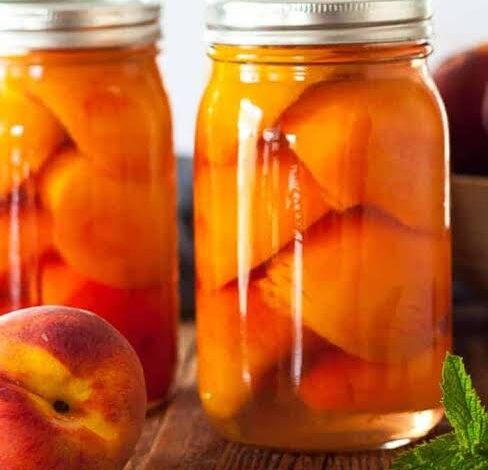
Pack the firm peach slices tightly into your warm glass jars, leaving about one half inch of empty space at the top of each jar. Pour the hot sugar syrup over the peaches, making sure all slices are covered while keeping that half inch space at the top.
-
Run a clean plastic utensil down the inner sides of each filled jar to release any trapped air bubbles. Wipe the top rim of every jar with a damp paper towel to clean off any sticky residue that might prevent a tight seal.
-
Place a flat lid on top of each jar, then screw the metal band down until it is fingertip tight. Do not force the band down too hard because air needs to escape during the hot water bath process.
-
To make the fruit spread, place your remaining chopped peaches into a large heavy bottomed pot. Use a potato masher to crush the fruit gently until you reach your favorite chunky or smooth texture.
-
Stir one half cup of bottled lemon juice and one package of powdered fruit pectin into the crushed fruit pot. Bring the fruit mixture to a full rolling boil over high heat, stirring constantly so nothing sticks to the bottom.
-
Add the remaining two cups of sugar and two tablespoons of butter into the boiling fruit mixture all at once. Stir vigorously and bring the mixture back to a hard boil that cannot be stirred down, then boil for exactly one full minute while stirring nonstop.
-
Remove the hot fruit spread pot from the stove heat. Carefully ladle the hot liquid into your remaining clean warm glass jars, leaving one quarter inch of empty space at the top rim.
-
Wipe the jar rims clean with a moist paper towel, apply the flat lids, and twist the outer metal bands until fingertip tight.
-
Lower all filled jars carefully into a very tall stockpot equipped with a bottom rack so the jars do not touch the direct metal bottom. Fill the pot with enough hot water so that the jar tops are covered by at least one inch of water.
-
Place the lid on the tall stockpot and bring the water to a complete rolling boil. Process both the sliced fruit jars and the fruit spread jars in the boiling water bath for twenty minutes.
-
Turn off the stove heat after twenty minutes and remove the stockpot lid. Let the jars sit undisturbed in the warm water for five minutes to stabilize before moving them.
-
Lift the hot jars straight up out of the pot using jar tongs and set them onto a thick clean towel laid out on your kitchen counter. Keep space between the jars so air can circulate freely around them.
-
Allow the jars to cool completely at room temperature for twelve to twenty four hours without moving them or pressing down on the middle of the lids. Listen for the satisfying pop sound that signals a safe, vacuum tight seal.
-
Check every seal after twenty four hours by pressing the middle of each metal lid. If the lid stays flat and firm without springing up, your food is preserved correctly and can be stored in a cool, dark pantry for up to one year.
Why This Recipe Is Special
This dual processing method gives you two totally different, delicious food styles out of a single basket of fresh orchard fruit. You get golden, tender fruit slices that taste like pure summer alongside a rich, thick fruit spread that transforms simple slices of bread into luxury treats. Preserving food at home keeps you fully connected to the origin of your food, removing mysterious factory processing steps and unnecessary chemical agents from your daily diet.
From a health standpoint, fresh peaches deliver a broad variety of natural vitamins, including vitamin C and vitamin A, which support healthy skin and immune system function. Peaches also supply natural dietary fiber that aids digestion and keeps your stomach feeling comfortable throughout the day. By using real bottled lemon juice, you balance the natural sweetness while adding essential acidity that makes the canning process completely safe for long term shelf storage.
The taste profile of this homemade creation is completely unmatched by anything you can purchase in a grocery store aisle. The natural aromatic notes of ripe fruit shine brightly because the cooking time is kept short and focused. Every spoon offers a clean burst of sunshine flavor that feels deeply comforting, nostalgic, and satisfying for people of all ages.
Extra Tips for Better Taste
-
Use a mix of fully ripe peaches for maximum sweetness and slightly firm peaches for great texture that keeps its shape in the jar.
-
Add a tiny pinch of ground cinnamon or half a grated nutmeg pod into the boiling fruit spread for a warm, cozy spice profile.
-
A small splash of pure vanilla extract added right after turning off the stove heat elevates the fragrance of your fruit spread dramatically.
-
Always use bottled lemon juice instead of fresh lemons because bottled juice maintains a guaranteed uniform acidity level needed for safe processing.
-
If you prefer a less sweet treat, you can reduce the white sugar slightly in the liquid syrup without affecting the safety of your sliced peaches.
-
Ensure your canning jars sit on a wooden cutting board or thick towel while cooling so the cold countertop glass shock does not crack the warm bottoms.
Final Thoughts
Making your own canned fruit slices and golden fruit spread is a beautiful kitchen journey that rewards your time with incredible flavor and long lasting food storage. Once you master these basic steps, you will feel confident exploring other seasonal fruits throughout the year. Share these golden jars with your close friends, neighbors, and family members to pass along the warmth of homemade goodness. Enjoy every single spoonful knowing you created something clean, wholesome, and completely delicious right in your own home kitchen.
Nutrition Details
The numerical values shown below are estimated calculations based on a single standard serving size of two tablespoons for jam and one half cup for sliced fruit.
| Recipe Component | Serving Size | Calories | Total Fat | Sodium | Total Carbohydrates | Sugars | Dietary Fiber | Protein |
| Canned Peach Slices | 1 half cup | 70 kcal | 0 grams | 0 milligrams | 18 grams | 16 grams | 1 gram | 1 gram |
| Sweet Peach Jam | 2 tablespoons | 50 kcal | 0 grams | 0 milligrams | 13 grams | 12 grams | 0 grams | 0 grams |
Disclaimer
Everyone has unique nutrition needs, health background factors, and individual dietary reactions. The information provided in this article is meant for educational and informational purposes only and should not replace professional medical or nutrition advice. Always consult with a qualified doctor or certified nutritionist if you have specific dietary concerns, medical conditions, or food allergies before trying new recipes. Processing times and acidity guidelines must be followed carefully to maintain food safety standard requirements in home kitchen environments.