Introduction
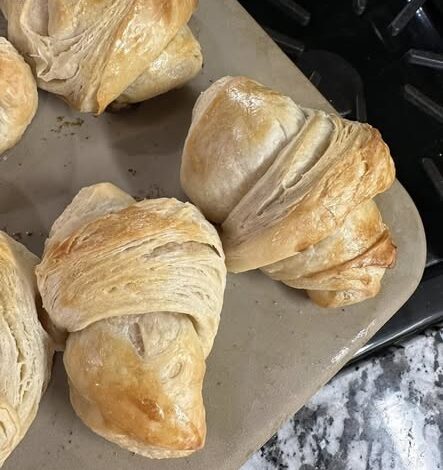
Soft, buttery, and delightfully tangy — sourdough crescent rolls bring a bakery-style taste to your home kitchen. Unlike traditional crescent rolls, this version uses active sourdough starter for flavor depth and a tender crumb that’s worth every bit of effort.
The sourdough not only enhances the taste but also improves digestibility, giving these rolls a wholesome, homemade charm. Whether you’re serving them alongside dinner, filling them with jam for breakfast, or using them as a base for sandwiches, they’re irresistibly good.
Perfect for holidays, family dinners, or a cozy weekend bake, sourdough crescent rolls combine the richness of buttery dough with the natural goodness of fermentation.
⏱ Cooking Time & Serving
-
Preparation Time: 25 minutes
-
Fermentation & Rising Time: 8–12 hours (overnight)
-
Baking Time: 15–18 minutes
-
Total Time: Approximately 9–13 hours
-
Servings: Makes 12 rolls
🧂 Ingredients
For the Dough
-
1 cup (240 g) active sourdough starter (fed and bubbly)
-
½ cup (120 ml) warm milk
-
2 ½ cups (310 g) all-purpose flour
-
2 tbsp granulated sugar
-
1 tsp salt
-
6 tbsp unsalted butter, softened
-
1 egg (for brushing)
Optional
-
2 tbsp melted butter (for brushing after baking)
-
1 tbsp honey (for a touch of sweetness in the dough)
👩🍳 How to Make Sourdough Crescent Rolls
-
Activate the Starter
Feed your sourdough starter 4–6 hours before baking until it’s bubbly and active. -
Mix the Dough
In a large mixing bowl, combine the warm milk, sugar, and sourdough starter. Add the flour and salt, then mix until a shaggy dough forms. -
Incorporate the Butter
Add softened butter a tablespoon at a time, kneading until it’s fully absorbed. Continue kneading for about 8–10 minutes until the dough is smooth and elastic. -
Bulk Fermentation (First Rise)
Cover the bowl with a damp cloth or plastic wrap and let it rise at room temperature (70–75°F / 21–24°C) for 8–12 hours, or overnight, until doubled in size. -
Shape the Crescent Rolls
Turn the dough onto a lightly floured surface and roll it into a 12-inch (30 cm) circle. Cut into 12 equal wedges like a pizza. Starting from the wide end, roll each wedge toward the point to form crescent shapes. -
Second Rise
Arrange the rolls on a parchment-lined baking sheet, cover lightly, and let them rise for 1–2 hours until puffy. -
Preheat and Bake
Preheat oven to 375°F (190°C). Brush the rolls with beaten egg for a golden finish. Bake for 15–18 minutes or until golden brown. -
Finish and Serve
Brush warm rolls with melted butter and cool slightly before serving.
📝 Notes
-
For a fluffier texture, avoid adding too much flour. The dough should feel soft and slightly tacky.
-
You can refrigerate the shaped rolls overnight and bake them fresh in the morning.
-
Add fillings like cheese, chocolate, or jam before rolling for a fun twist!
-
Store leftovers in an airtight container for up to 3 days or freeze for up to a month.
❓ FAQs
Q: Can I make this recipe without a sourdough starter?
A: Yes, but the flavor and texture will differ. Substitute 2 tsp instant yeast and reduce the milk to ⅓ cup.
Q: My dough didn’t rise well. What went wrong?
A: Your starter might not have been active enough. Always ensure it’s bubbly and doubles in size before using.
Q: Can I make these vegan?
A: Yes! Replace butter with vegan margarine and milk with plant-based milk (like almond or oat milk).
Q: How do I keep them soft after baking?
A: Wrap the rolls in a clean towel as they cool to trap steam, keeping them pillowy soft.
🍽 Nutrition Information
| Nutrient | Per Recipe (12 Rolls) | Per Serving (1 Roll) |
|---|---|---|
| Calories | 1440 kcal | 120 kcal |
| Total Fat | 60 g | 5 g |
| Saturated Fat | 36 g | 3 g |
| Carbohydrates | 192 g | 16 g |
| Sugars | 24 g | 2 g |
| Protein | 36 g | 3 g |
| Fiber | 6 g | 0.5 g |
| Sodium | 1440 mg | 120 mg |
Values are approximate and may vary based on ingredients used.
⚠️ Disclaimer
Enjoy sourdough crescent rolls in moderation as part of a balanced diet. If you have gluten, dairy, or egg allergies, please substitute with suitable alternatives or avoid this recipe. Always check ingredient labels for allergens.